🎁 Save 100 Lei. ❤️ You choose the cause. We donate.Create a plan


Pregnancy: a practical guide to taking care of yourself and your baby
Table of Contents
1. Make Prenatal Care a Priority
A simple habit
2. Nourish Yourself, Not Perfection
Keep it practical
3. Remember the Small Nutrients That Matter
Be careful with supplements
4. Keep Moving — In a Way That Feels Right for You
5. Give Rest a Place on Your List
6. Your Emotional Wellbeing Matters
7. Make Everyday Life a Little Simpler
Today
Later
Before baby arrives
8. Start Preparing for Baby Gradually
9. Prepare for Birth Without Trying to Control Every Detail
10. Know When to Ask for Help
Medical References
Important
2 months ago
• ⏱️ 6 min read
Pregnancy can bring excitement, questions, changes, and a surprisingly long list of things to keep in mind. But taking care of yourself during pregnancy doesn't mean you have to do everything perfectly. Start with the essentials. Take it one step at a time. And remember that taking care of yourself is also taking care of your baby.

1. Make Prenatal Care a Priority
Regular prenatal care gives you the opportunity to follow your pregnancy, ask questions and identify potential concerns with the support of qualified healthcare professionals.
The World Health Organization recommends a model of at least eight antenatal contacts during pregnancy, with the first contact taking place during the first trimester.
Your individual schedule may be different depending on your health, pregnancy and the maternity-care system where you live.
A simple habit
Keep your appointments, questions, test results and important pregnancy information together in one place.
Before each appointment, write down anything you want to ask — even the questions that seem small.
2. Nourish Yourself, Not Perfection
Pregnancy doesn't require a complicated or expensive special diet.
Focus instead on variety and balance.
A nutritious pregnancy diet can include:
- Fruit and vegetables
- Whole grains and other starchy foods
- Protein-rich foods
- Dairy products or suitable alternatives
- Healthy sources of fats
- Plenty of appropriate fluids
And despite the familiar phrase, pregnancy does not generally mean you need to “eat for two.”
What matters more is the nutritional quality and balance of what you eat.
Keep it practical
Some days may be easier than others, especially if you're dealing with nausea, tiredness or changes in appetite.
Aim for consistency over perfection.
3. Remember the Small Nutrients That Matter
Some nutrients become particularly important during pregnancy.
Folic acid is one of them.
Guidance from the NHS recommends 400 micrograms of folic acid each day when trying to become pregnant and during the first 12 weeks of pregnancy. Some people may be advised to take a higher dose based on their individual circumstances, so this should be discussed with a healthcare professional.
WHO antenatal guidance also recommends iron and folic acid supplementation during pregnancy, although individual recommendations can vary depending on health needs and local medical guidance.
Be careful with supplements
More is not always better.
Some supplements are not suitable during pregnancy. For example, the NHS advises avoiding cod liver oil and supplements containing vitamin A in the form of retinol during pregnancy.
Before adding supplements, herbal preparations or other health products to your routine, check with your doctor, midwife or pharmacist.
4. Keep Moving — In a Way That Feels Right for You
For many people with uncomplicated pregnancies, staying active can be an important part of a healthy pregnancy.
Walking, gentle movement and other pregnancy-appropriate activities can help you stay active without turning exercise into another task you have to “get right.”
The NHS recommends aiming for around 150 minutes of activity per week during pregnancy, while listening to your body and adapting activity as pregnancy progresses.
But every pregnancy is different.
If you have a medical condition, pregnancy complication, pain or concerns about exercise, speak with your healthcare professional about what is appropriate for you.
Movement should support your wellbeing — not become another source of pressure.

5. Give Rest a Place on Your List
Pregnancy asks a lot from your body.
Some days you may have plenty of energy. Other days, even your usual routine can feel more demanding.
Rest does not need to be something you “earn” after completing everything else.
Try to create small moments of recovery throughout your day:
- Slow down when your body asks you to
- Make your sleep environment comfortable
- Share responsibilities when possible
- Leave space in your schedule
- Accept help when it is available
Preparing for a baby is important.
Taking care of the person carrying the baby is important too.
6. Your Emotional Wellbeing Matters
Pregnancy is not only a physical transition.
It can bring happiness and excitement, but also uncertainty, stress and many different emotions.
You don't have to experience pregnancy in one particular way.
Talk openly with people you trust and bring emotional concerns into conversations with your healthcare team, just as you would physical concerns.
If something feels difficult, asking for support is a form of care.
7. Make Everyday Life a Little Simpler
There can suddenly be a lot to remember:
Appointments.
Vitamins.
Questions for your doctor.
Things for the baby.
Things for yourself.
Hospital preparation.
Home preparation.
And everyday life doesn't stop just because you're pregnant.
Instead of trying to prepare for everything at once, divide your pregnancy into smaller steps.
Today
Focus on what you need now.
Later
Create a list for things that can wait.
Before baby arrives
Gradually prepare the essentials for the first days and weeks at home.
Preparation should reduce pressure — not create more of it.
8. Start Preparing for Baby Gradually
You don't need to buy everything immediately.
Begin with the basics and build from there.
Think about categories rather than an endless shopping list:
Sleep
A safe sleeping space and the essentials recommended for newborn sleep.
Feeding
What you may need will depend on how you plan to feed your baby and how feeding develops after birth.
Changing
Nappies, changing essentials and simple baby-care products.
Clothing
A small collection of comfortable basics in newborn and early sizes.
Going out
Consider what you'll realistically need for transport and short trips.
Home
Prepare the areas where you'll spend the most time during those first weeks.
Babies grow quickly, and families discover their preferences as they go.
Start simple. You can always add what you genuinely need later.
9. Prepare for Birth Without Trying to Control Every Detail
As pregnancy progresses, start thinking about:
- Where you expect to give birth
- Your preferences for labour and birth
- What to pack for yourself and baby
- Who you want with you
- Transportation
- Important contacts
- What the first days at home might look like
A birth plan can help you communicate your preferences, but birth does not always follow a plan.
Think of preparation as creating options and confidence, rather than trying to predict every moment.
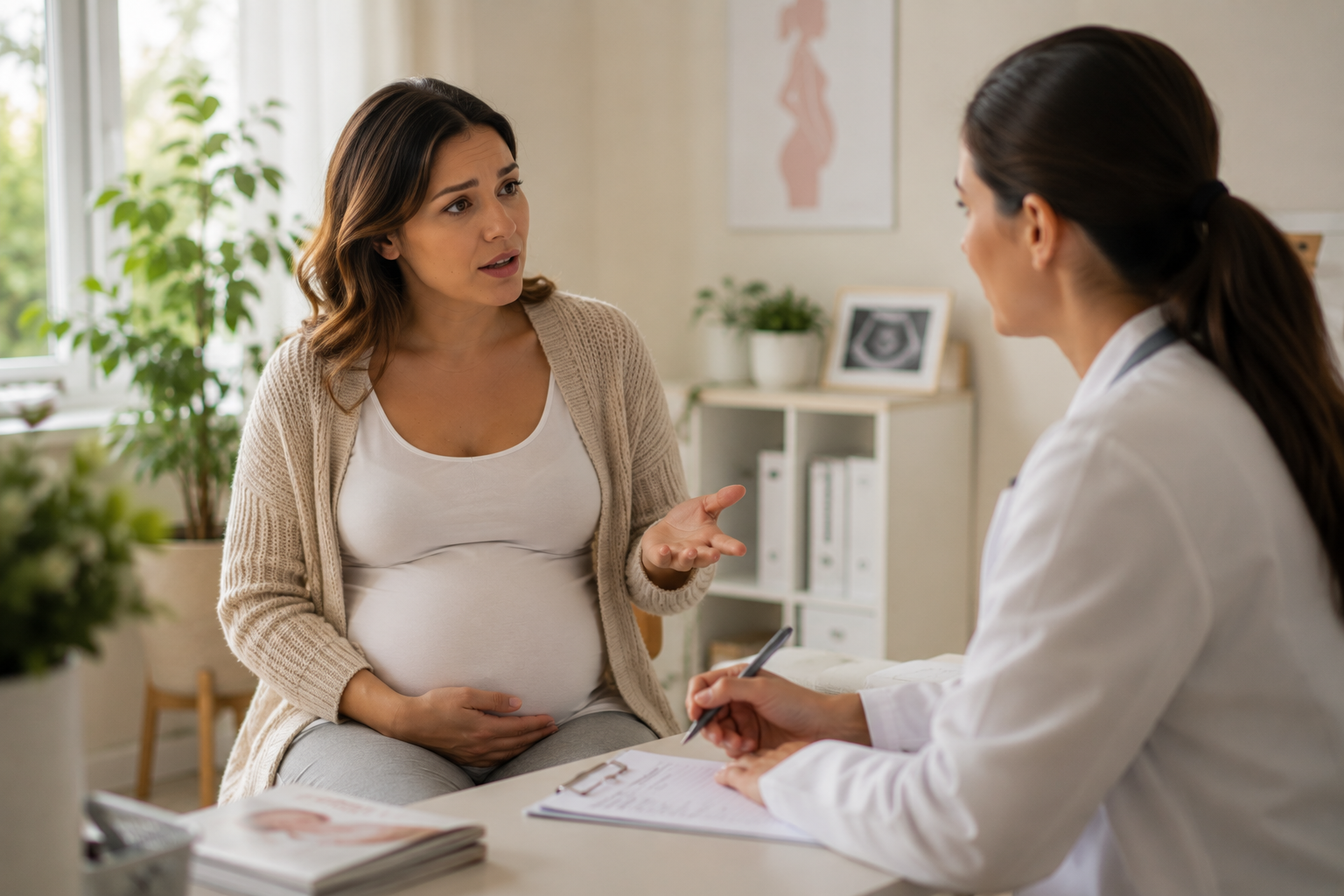
10. Know When to Ask for Help
Pregnancy comes with many normal changes, but you should never feel that you need to work out concerning symptoms by yourself.
If you notice a new symptom, something feels wrong, or you're simply uncertain, contact your doctor, midwife, maternity unit or other qualified healthcare professional.
You don't need to wait until something feels “serious enough” before asking a question.
One Step at a Time
There will always be another checklist, another recommendation and another thing you could prepare.
You don't have to do everything today.
One appointment.
One question.
One healthy choice.
One small preparation at a time.
Pregnancy is not about preparing perfectly.
It's about caring for yourself, staying informed and gradually creating the support and environment you and your baby will need.
Medical References
World Health Organization (WHO)
Antenatal care recommendations and guidance on a positive pregnancy experience.
World Health Organization (WHO)
Guidance on nutrition, physical activity, iron and folic acid supplementation during pregnancy.
NHS – Best Start in Life
Healthy eating during pregnancy.
NHS – Best Start in Life
Pregnancy vitamins and supplements.
NHS – Best Start in Life
Exercise and wellbeing during pregnancy.
Important
This article provides general information only and does not replace personalized advice, diagnosis or care from a doctor, midwife or other qualified healthcare professional. Pregnancy needs and recommendations can differ from person to person and between healthcare systems.
Table of Contents
1. Make Prenatal Care a Priority
A simple habit
2. Nourish Yourself, Not Perfection
Keep it practical
3. Remember the Small Nutrients That Matter
Be careful with supplements
4. Keep Moving — In a Way That Feels Right for You
5. Give Rest a Place on Your List
6. Your Emotional Wellbeing Matters
7. Make Everyday Life a Little Simpler
Today
Later
Before baby arrives
8. Start Preparing for Baby Gradually
9. Prepare for Birth Without Trying to Control Every Detail
10. Know When to Ask for Help
Medical References
Important