🎁 Save 100 Lei. ❤️ You choose the cause. We donate.Create a plan

Your Changing Body During Pregnancy: What to Expect Along the Way
Table of Contents
1. The First Trimester: Changes You May Feel Before You Can See Them
Your breasts may be among the first things you notice
2. Your Growing Belly Is Only Part of the Story
3. Your Skin and Hair May Change Too
4. Your Digestive System May Feel Different
5. You May Need the Bathroom More Often
6. Your Circulation Is Adapting
7. Tiredness Can Come, Go — and Come Back Again
Early pregnancy
Second trimester
Third trimester
8. Your Breathing May Feel Different
9. Changes People Don't Always Talk About
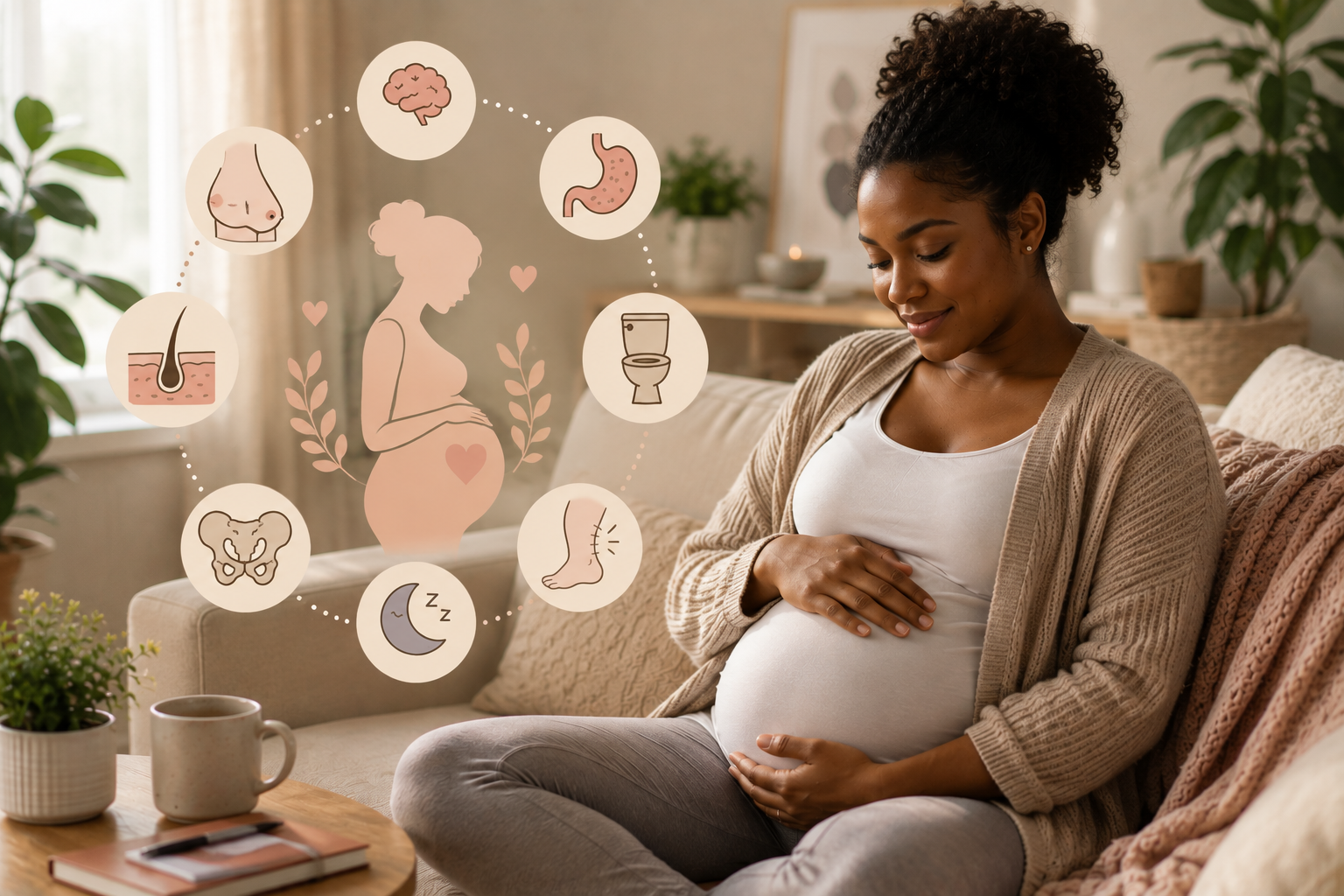
10. Your Body Isn't “Just Getting Bigger”
11. When a Change Deserves a Conversation With Your Healthcare Team
Medical References
Important
2 months ago
• ⏱️ 8 min read
Pregnancy changes much more than the size of your belly. From the earliest weeks, your body begins adapting to support your pregnancy. Hormones change, blood supply increases, your uterus grows, your breasts prepare for feeding, and your muscles and joints gradually adjust.
Related Products
Some changes may be expected.
Others might surprise you.
And some days, you may simply wonder:
“Is this normal?”
Every pregnancy is different, and you may experience some, many or very few of the changes below.
Understanding what may happen can make those changes feel a little less unexpected.
1. The First Trimester: Changes You May Feel Before You Can See Them
During the first weeks of pregnancy, you may not look very different on the outside.
Inside your body, however, a lot is already happening.
Pregnancy hormones rise rapidly during this period and can contribute to several early pregnancy symptoms.
You may experience:
- Tiredness
- Nausea
- Tender or fuller breasts
- Changes in appetite
- Increased sensitivity to smells
- Bloating
- Mood changes
- Needing to urinate more often
For some people, extreme tiredness can be one of the earliest and most noticeable changes.
And although it's often called “morning sickness,” nausea doesn't necessarily happen only in the morning.
Your breasts may be among the first things you notice
Breasts can become larger, more sensitive or sore during pregnancy.
The nipples and the area surrounding them may also become darker as pregnancy progresses.
These changes are part of the body's preparation for feeding your baby after birth.
Remember: pregnancy doesn't look or feel the same for everyone. Having fewer symptoms does not automatically mean something is wrong.
2. Your Growing Belly Is Only Part of the Story
As your uterus expands and your baby grows, your belly gradually changes shape and size.
But your growing bump is only one part of what your body is doing.
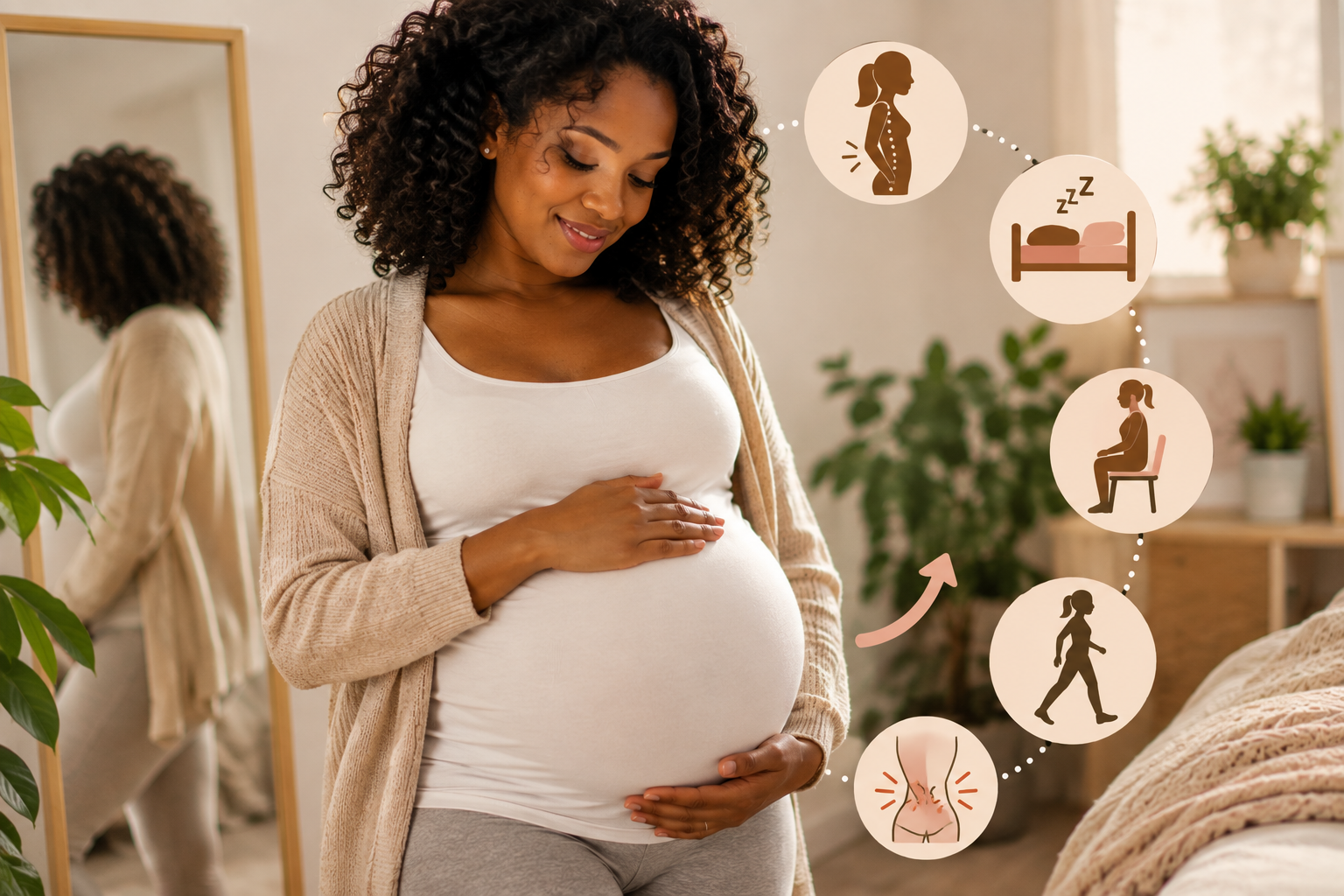
Your posture may begin to change as your centre of gravity shifts.
Later in pregnancy, the additional strain on your back, together with changes affecting joints and ligaments, can contribute to backache or pelvic discomfort.
You may find yourself changing the way you:
- Sit
- Sleep
- Stand
- Bend
- Walk
- Get out of bed
Simple everyday movements can start to feel surprisingly different.
Give yourself permission to slow down and adapt.
Your body is doing something new. Your routine can change with it.
3. Your Skin and Hair May Change Too
Pregnancy hormones can affect your skin in several ways.
Some people notice that their skin becomes darker in certain areas. The nipples and surrounding skin may darken, and a darker line can sometimes appear down the centre of the abdomen.
Some people also develop darker patches on the face, often called melasma or the “mask of pregnancy.”
Your skin may become oilier or behave differently from how it did before pregnancy.
Hair can change too. Some pregnant people notice that their hair feels thicker or shinier.
And then there are stretch marks.
As the body grows and changes, stretch marks may appear on areas such as the abdomen, breasts or thighs.
Bodies respond differently to pregnancy, so your skin changes may not look like somebody else's.
There is no single way a pregnant body is supposed to look.
4. Your Digestive System May Feel Different
Pregnancy hormones don't only affect your reproductive system.
They can also influence digestion.
You may notice:
- Bloating
- Constipation
- Indigestion
- Heartburn
- Changes in appetite
Constipation can begin surprisingly early in pregnancy, while heartburn and indigestion may become more noticeable as pregnancy progresses.
Eating a balanced diet with appropriate fibre, staying hydrated and remaining active when medically appropriate can support digestive health.
If digestive symptoms become difficult to manage, speak with your doctor, midwife or pharmacist rather than simply taking a medicine you normally use. Not every medicine is suitable during pregnancy.
5. You May Need the Bathroom More Often
If you suddenly feel as though you're always looking for the nearest bathroom, you're not alone.
Frequent urination can begin early in pregnancy and may continue throughout it.
Later, as your baby grows, additional pressure on the bladder can make those bathroom trips even more frequent.
You may also experience occasional urine leakage when coughing, laughing or sneezing.
Changes to the pelvic floor during pregnancy can contribute to this.
If you experience pain or burning when urinating, notice blood in your urine or have other concerns, contact a healthcare professional because these symptoms may need medical assessment.
6. Your Circulation Is Adapting
Your cardiovascular system also adapts during pregnancy.
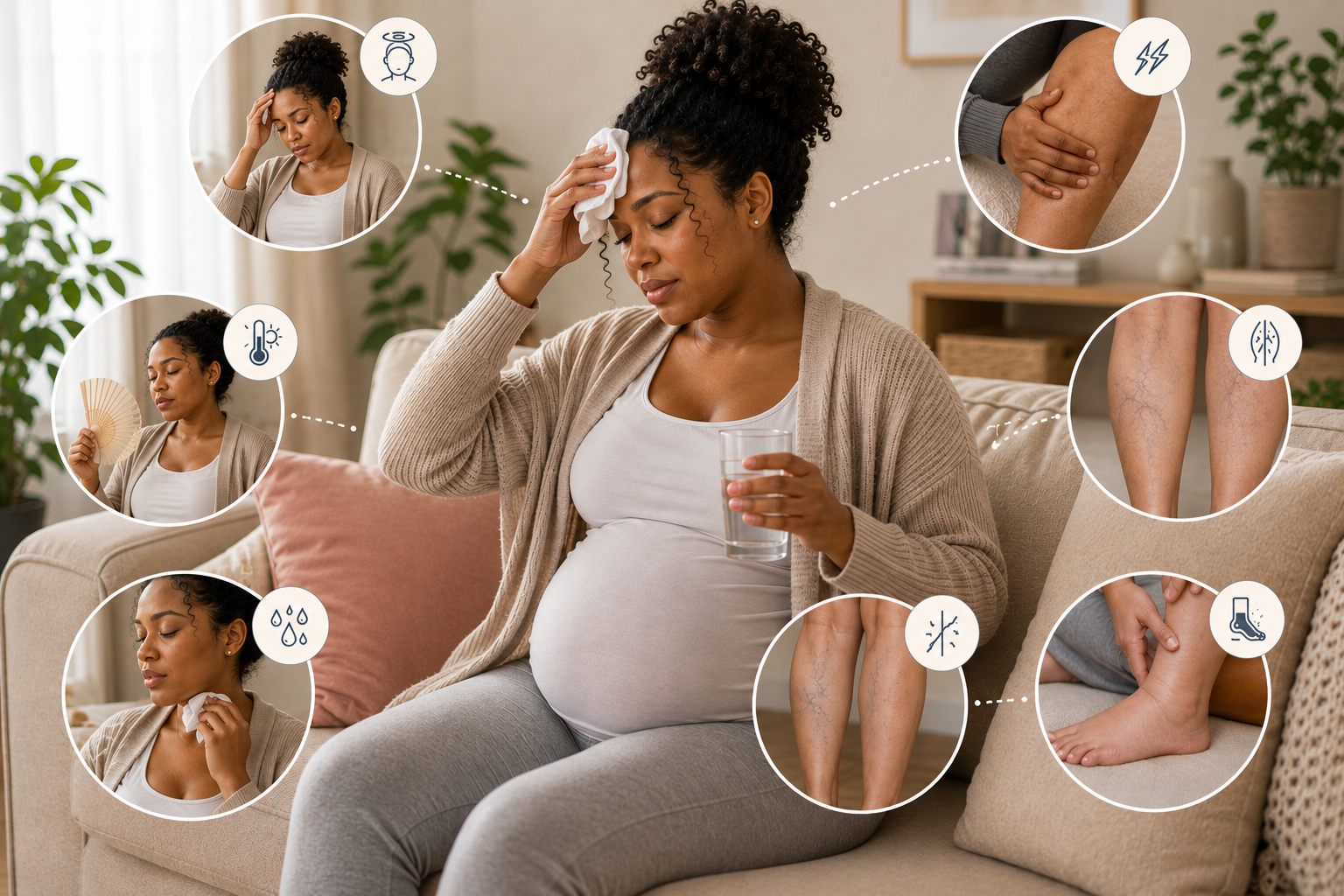
Some people notice that they:
- Feel warmer than usual
- Sweat more
- Feel light-headed occasionally
- Develop leg cramps
- Notice veins becoming more visible
- Experience some swelling, particularly later in pregnancy
Varicose veins can also develop, especially in the legs.
Some swelling can occur during pregnancy, particularly as pregnancy progresses.
However, a sudden increase in swelling — particularly when accompanied by symptoms such as a severe headache or changes in vision — needs prompt medical assessment.
When something changes suddenly, don't assume it's “just pregnancy.”
7. Tiredness Can Come, Go — and Come Back Again
Pregnancy tiredness isn't necessarily the same throughout all nine months.
Early pregnancy
Hormonal changes can leave you feeling unusually tired, sometimes before other people even know you're pregnant.
Second trimester
Some people find they have more energy during this period.
Others don't — and that's okay too.
Third trimester
Tiredness may return as your baby grows and sleeping comfortably becomes more difficult.
You may wake because you need the bathroom, struggle to find a comfortable position or simply find that your body needs more rest.
Rest isn't a reward for finishing your to-do list. It's part of caring for yourself during pregnancy.
8. Your Breathing May Feel Different
As pregnancy progresses, you may sometimes notice that you become breathless more easily than before.
Your body is adapting throughout pregnancy, and as your baby grows, everyday activities may feel more demanding.
But there is an important difference between becoming slightly breathless with activity and experiencing sudden or severe difficulty breathing.
If breathlessness begins suddenly, occurs while you're lying down, or comes with symptoms such as chest pain or dizziness, seek medical assessment promptly.
9. Changes People Don't Always Talk About
Some pregnancy changes appear in almost every pregnancy conversation.
Others don't.
You might experience things such as:
More vaginal discharge
An increase in discharge can occur during pregnancy. If its colour, smell or consistency changes noticeably, or you're unsure whether you could be leaking fluid, contact your maternity team.
Bleeding gums or nosebleeds
Changes during pregnancy can make these more noticeable for some people.
Feeling hotter
Increased blood flow to the skin and hormonal changes can leave you feeling warmer and sweating more.
Changes in your sense of smell
Scents you barely noticed before pregnancy can suddenly feel incredibly strong.
Different food preferences
Foods you previously loved may suddenly seem unappealing, while your preferences may change in unexpected ways.
Emotional changes
Pregnancy is a physical transition, but it can also be an emotional one.
Excitement, uncertainty, happiness, worry and feeling overwhelmed can sometimes exist alongside each other.
You don't need to experience pregnancy in a particular emotional way for your experience to be valid.
10. Your Body Isn't “Just Getting Bigger”
It can be easy to reduce pregnancy to the growing belly.
But your body is doing much more than changing size.
It is adapting its circulation.
Your uterus is expanding.
Your breasts are preparing for feeding.
Your posture is adjusting.
Your digestive and urinary systems may behave differently.
Your muscles and joints are adapting.
And your energy needs and sleep can change along the way.
Rather than comparing your changing body with somebody else's pregnancy, try to think about what your body needs today.
Some days that might mean movement.
Other days it might mean rest.
Sometimes it means asking a question.
And sometimes it means simply giving yourself more time.
11. When a Change Deserves a Conversation With Your Healthcare Team
Many body changes during pregnancy are common.
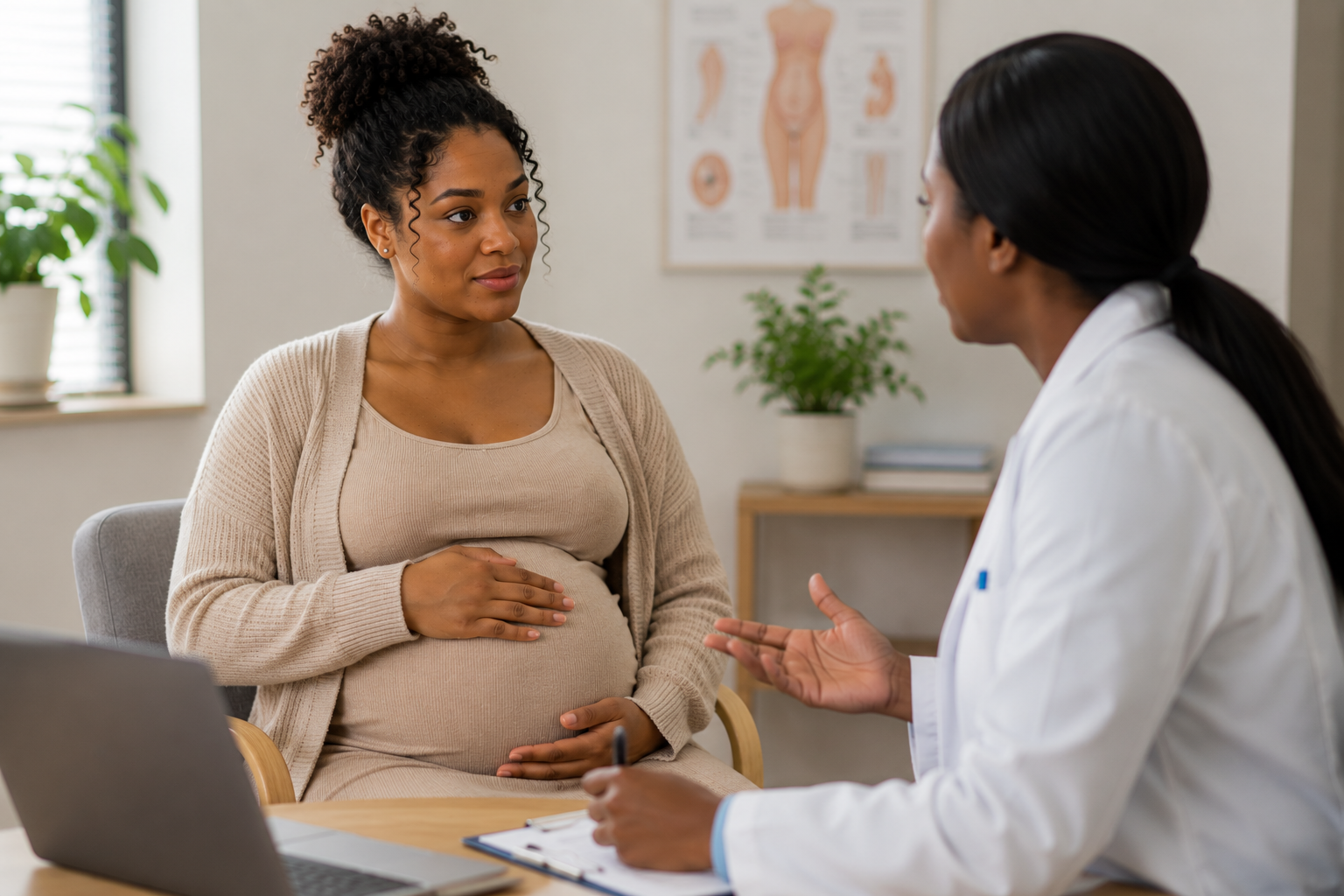
But “common in pregnancy” should never mean ignoring something that worries you.
Contact your maternity team or another appropriate healthcare professional if you notice something concerning or if you simply feel that something isn't right.
Some symptoms require prompt medical assessment, including:
- Vaginal bleeding
- A severe headache
- Sudden problems with vision
- A sudden increase in swelling
- Sudden or significant breathing difficulty
- Fluid leaking from the vagina when you're unsure what it is
- A change in your baby's usual movements once you have begun regularly feeling them
- Significant or persistent pain
- Severe vomiting or difficulty keeping fluids down
- Fever or feeling very unwell
This is not a complete list.
You know when something feels different in your body. If you're worried, asking your healthcare team is always appropriate.
Your Body, Your Pregnancy, Your Experience
Pregnancy can sometimes feel like meeting a new version of your body every few weeks.
Something fits differently.
Something feels different.
Your energy changes.
Your belly grows.
Your sleep changes.
And just when you become accustomed to one stage, another begins.
You don't need to love every change.
You don't need to compare your pregnancy with someone else's.
And you don't need to understand everything immediately.
Notice the changes. Ask questions. Rest when you need to. Get support when something concerns you.
Your body is going through an extraordinary period of adaptation.
Take it one change — and one day — at a time.
Medical References
NHS – Common health problems in pregnancy
Information about common pregnancy-related changes including constipation, frequent urination, skin changes, feeling faint, feeling hot, incontinence and varicose veins.
NHS – Best Start in Life: Pregnancy week-by-week
Information about physical changes and common symptoms throughout the first, second and third trimesters.
NHS – Tiredness and sleep problems in pregnancy
Guidance about tiredness during early and later pregnancy and changes that can affect sleep.
NHS – Pregnancy symptoms you need to get help for
Guidance on symptoms that should be discussed urgently with maternity or healthcare services.
Important
This article provides general educational information only and does not replace individualized medical advice, diagnosis or care from your doctor, midwife or another qualified healthcare professional.
Pregnancy experiences vary considerably. If a symptom concerns you, changes suddenly or feels unusual for you, contact an appropriate healthcare professional.
Table of Contents
1. The First Trimester: Changes You May Feel Before You Can See Them
Your breasts may be among the first things you notice
2. Your Growing Belly Is Only Part of the Story
3. Your Skin and Hair May Change Too
4. Your Digestive System May Feel Different
5. You May Need the Bathroom More Often
6. Your Circulation Is Adapting
7. Tiredness Can Come, Go — and Come Back Again
Early pregnancy
Second trimester
Third trimester
8. Your Breathing May Feel Different
9. Changes People Don't Always Talk About
10. Your Body Isn't “Just Getting Bigger”
11. When a Change Deserves a Conversation With Your Healthcare Team
Medical References
Important